Post Construction Cleaning Equipment, Tools & Supplies (2026)
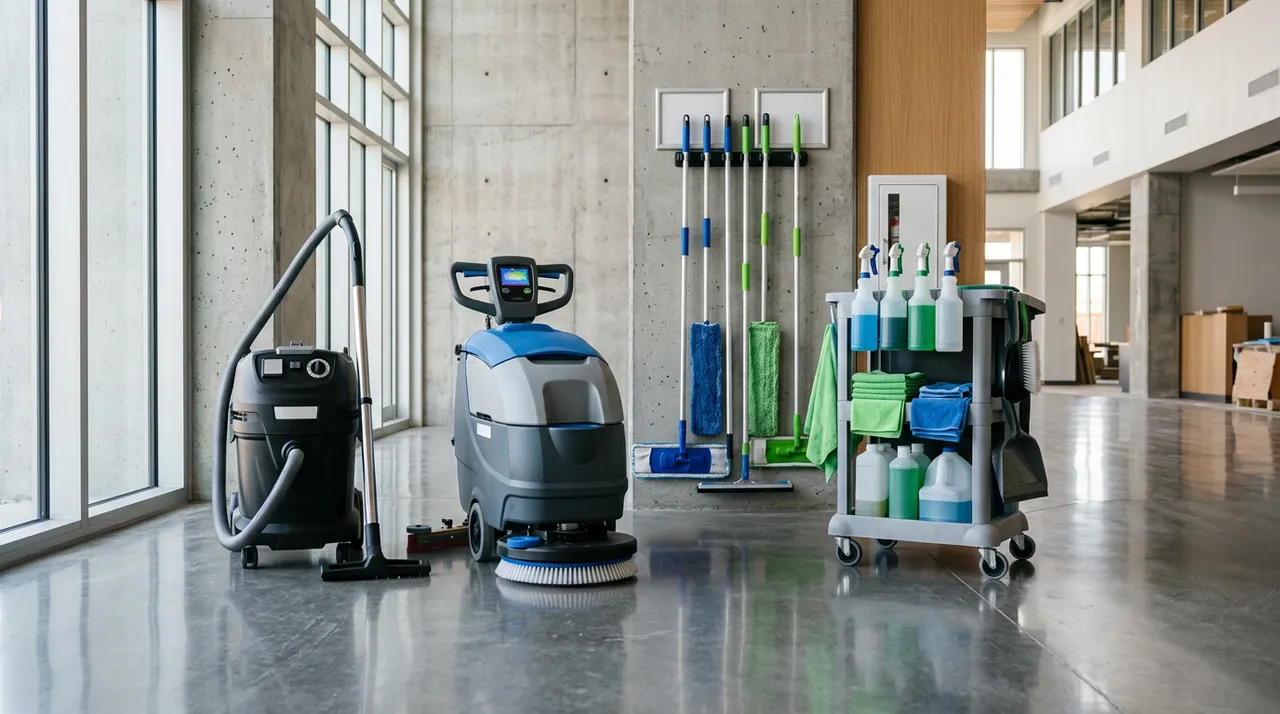
Post construction cleaning lives and dies by equipment. The ultra-fine dust a build leaves behind can’t be handled with a broom and a shop rag — it needs HEPA filtration, microfiber capture, and the right floor machines. Here’s the professional tools and supplies list, and why each one matters.
Dust removal & capture
- HEPA-filter vacuums — capture ultra-fine drywall dust instead of recirculating it
- Backpack vacuums — mobility for walls, ledges, vents, and high areas
- Microfiber cloths and flat mops — trap fine particulate electrostatically
- Extendable dusters and poles — reach ceilings, ductwork, and high fixtures
- Air movers / negative-air machines — control airborne dust on larger jobs
Glass & surface detailing
- Professional squeegees and scrapers — streak-free glass, sticker and paint-spot removal
- Water-fed poles — safe high-glass cleaning without ladders
- Non-abrasive pads and safe solvents — residue removal without scratching finishes
- Detailing brushes — tracks, frames, and tight corners
Floor care machines
| Machine | Use | Floor types |
|---|---|---|
| Auto-scrubber | Deep-clean hard floors fast | VCT, concrete, tile |
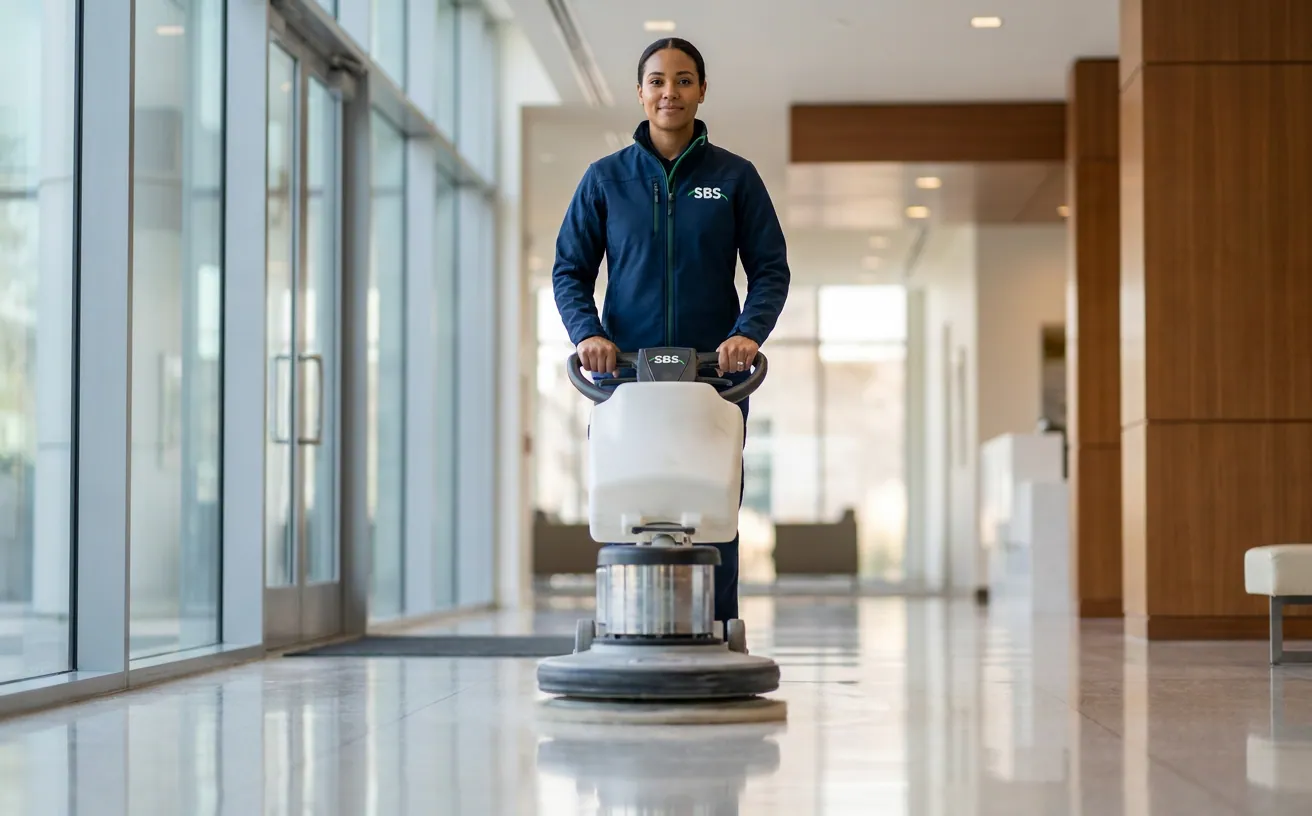
| Burnisher | High-gloss finish | Waxed VCT |
| Floor stripper / buffer | Strip and refinish | VCT, resilient |
| Carpet extractor | Deep-clean carpet | Carpet, mats |
Safety & PPE
- N95 / respirators for dust protection
- Gloves, eye protection, and non-slip footwear
- Ladders, lifts, and fall protection for high work
- Wet-floor signage and jobsite safety compliance
Cleaning chemicals & solutions
The right chemistry matters as much as the right machine. Construction leaves behind adhesives, grout haze, paint overspray, and mineral deposits that need specific — but non-abrasive — solutions so new finishes aren’t damaged in the process of cleaning them.
- pH-neutral cleaners for daily surfaces and delicate finishes
- Adhesive and residue removers for stickers, labels, and tape
- Grout haze and mineral-deposit removers for tile and stone
- Glass cleaners formulated to leave no film on new windows
- Green-certified, low-VOC options for occupied-adjacent and LEED projects
The tell of a professional crew: HEPA everything. If a cleaner shows up with a standard shop vacuum for a final clean, the dust will be back within days.
Why professional equipment protects your finishes
Post-construction cleaning is the last chance to protect an expensive build before handover — and the wrong tools can undo it. An abrasive pad on the wrong floor, a shop vacuum that recirculates dust, or the wrong solvent on a delicate surface can scratch, haze, or streak brand-new finishes. Professional equipment isn’t about looking the part; it’s about not damaging tens or hundreds of thousands of dollars of finish work in the final hour.
It’s also about air quality and safety. Construction dust is a respiratory hazard, and moving it around without HEPA capture and proper PPE puts the crew — and anyone else on site — at risk. A professional operation treats dust as something to capture and remove, not just relocate.
Equipment by cleaning phase
Different phases lean on different tools. Knowing which equipment belongs to which phase helps you scope the work and spot a cleaner who’s under-equipped for the job.
| Phase | Primary equipment |
|---|---|
| Rough clean | Shop/HEPA vacuums, brooms, debris carts, trash-out gear |
| Final clean | HEPA & backpack vacuums, microfiber, squeegees, floor machines |
| Touch-up | Microfiber, detailing brushes, glass tools, spot cleaners |
| Floor finishing | Strippers, auto-scrubbers, burnishers, wet-vacs |
What to ask a cleaner about their equipment
- 1Do you use HEPA-filter vacuums for construction dust? (The answer must be yes.)
- 2What equipment do you have for high dusting and tall glass — poles, lifts?
- 3What floor machines do you bring for our floor types?
- 4How do you protect delicate finishes from abrasives and the wrong chemicals?
- 5Is your team equipped with proper PPE for dust exposure?
Frequently asked questions
Can’t the construction crew just clean up with a shop vacuum?
A shop vacuum without HEPA filtration recirculates ultra-fine drywall dust back into the air, where it resettles onto surfaces for days or weeks. It’s fine for bulk debris in a rough clean, but a final clean needs HEPA capture and microfiber to actually remove the fine dust rather than move it.
Do I need to provide any equipment or supplies?
No. A professional post-construction cleaning company brings all of its own equipment, chemicals, and PPE. You provide site access, power, and water; they bring everything else.
HEPA filtration: why it’s non-negotiable
It’s worth understanding why HEPA keeps coming up. Construction dust — from drywall sanding, cutting, and grinding — contains particles small enough to stay airborne for hours and to slip straight through a standard vacuum filter, which then blows them back into the room. A HEPA (High-Efficiency Particulate Air) filter captures the vast majority of these fine particles instead of recirculating them. That’s the entire difference between removing dust and merely relocating it. On a final clean, a non-HEPA vacuum doesn’t just do a worse job — it actively works against you, seeding the air with dust that resettles onto the surfaces you just wiped.
Matching equipment to floor type
Floors are where the wrong tool does visible, expensive damage. The machine and pad that restore one surface can haze or scratch another, so professional crews match equipment to the floor:
| Floor type | Typical equipment & approach |
|---|---|
| VCT | Auto-scrubber; strip & wax with the correct pads |
| Polished concrete | Auto-scrubber, non-abrasive pads |
| Ceramic / porcelain tile | Scrubber + grout detailing |
| Natural stone | pH-neutral cleaners, soft pads (no acids) |
| Carpet | HEPA vacuum + hot-water extraction |
Related: Post Construction Cleaning Checklist
And: How to Choose a Post Construction Cleaning Company
Why owning the equipment beats renting it
There’s a meaningful difference between a company that owns and maintains its equipment and one that rents machines job-to-job. Owned equipment is maintained, familiar to the crew, and always available on short notice — which matters when your handover date moves up. Crews that rent tend to get whatever the rental yard has, may not know the machine well, and can be limited by availability during busy construction seasons. For a deadline-driven final clean, an operation with its own HEPA vacuums, floor machines, and high-access gear is simply more dependable.
A note on safety and site compliance
Post-construction sites are still active job sites, and the right “equipment” includes the safety program behind the crew. Professional teams show up with the required PPE, follow OSHA jobsite rules, use fall protection for high work, and post wet-floor signage during floor care. This isn’t bureaucratic box-ticking — it protects your project from liability and keeps the crew safe on a site that may still have other trades moving around. When you ask about equipment, ask about safety in the same breath; the answer tells you a lot about how the company operates.
Microfiber: the unsung hero of dust removal
HEPA vacuums get the attention, but microfiber does an enormous amount of the actual dust removal on a final clean. Unlike cotton rags, which mostly push fine dust around and redeposit it, quality microfiber has split fibers that trap and hold ultra-fine particles electrostatically — the same reason it’s used in cleanrooms and labs. Used dry for high dusting and lightly damp for surfaces, and swapped frequently so it doesn’t saturate, microfiber is what turns “wiped” into “actually clean.” It’s a small detail that separates a professional result from a smeared one.
How professionals stage equipment on site
On a larger job, equipment logistics matter as much as the tools themselves. Professional crews stage a central caddy of supplies, position HEPA vacuums and floor machines by zone, and work top-to-bottom and back-to-front so cleaned areas aren’t re-contaminated or walked through. They coordinate power and water access with the GC in advance, and reserve elevators or lifts where the job needs them. A crew that shows up and figures this out on the fly wastes hours; one that plans it hits the schedule.
Key takeaways
- HEPA vacuums are non-negotiable — they capture fine dust instead of recirculating it.
- Microfiber traps ultra-fine particles that cotton rags just push around.
- Match floor machines and pads to the surface to avoid haze and scratches.
- Use the correct, non-abrasive chemistry for residue, grout, and delicate finishes.
- Owned, maintained equipment beats rentals for reliability on a deadline.
- Ask about safety and PPE in the same breath as equipment.
The fastest way to judge whether a crew is equipped for post-construction work is to look at what comes off the truck. HEPA vacuums, water-fed poles, floor machines, microfiber, and proper PPE signal a professional operation. A mop and a shop vac signal a routine cleaning crew that will leave your dust exactly where it started.
Want a crew that shows up with the right equipment?
See our post construction cleaning service